Best Walking Shoes for Women
By the Editorial Team
The best walking shoes for women are the ones that suit your feet, your walking, and your life. There is no single shoe that suits everyone, and this guide does not test or rank products. Instead, it explains what makes a good walking shoe, what to look for in comfort, support, grip, and fit, and how to choose a pair that feels good all day. Whether you walk in the garden, around the shops, or with friends in the park, the right shoes can help you walk further and enjoy it more.
Best walking shoes for women: what to look for
The best walking shoes for women are comfortable, supportive, and safe. They should cushion your feet, support your arches, and grip the ground well, so you feel steady on your feet. They should be light enough to walk in for an hour or more, and easy to put on and take off. Look for shoes with a wide, roomy toe box, a firm heel counter, and a sole that bends where your foot bends. Try shoes on in the afternoon, when your feet are at their largest, and walk around the shop before you buy.
Comfort and cushioning
Comfort and cushioning matter most, because a shoe you enjoy wearing is one you will wear. Look for a cushioned insole that supports the arch of your foot, and a midsole that absorbs shock when you walk. A shoe with good cushioning feels soft underfoot, without feeling squashed or unstable. If you have sore feet, look for shoes with extra cushioning and a removable insole, so you can use your own insoles or orthotics if you need them.
Try shoes on with the socks you usually wear, and walk around for a few minutes. Your feet should feel comfortable straight away, with no pinching or rubbing. A shoe that hurts in the shop will not get better with wear. If you have wide feet, look for shoes in a wide fitting, and if you have bunions or sore toes, look for a wide, roomy toe box. Our guide to House Shoes for Older Ladies has more advice on comfort and fit at home.
Support and stability
Support and stability keep your feet and ankles steady as you walk. Look for a shoe with a firm heel counter, which is the stiff part at the back of the shoe that holds your heel in place, and a midsole that supports your arch. A shoe that twists easily in the middle is too flexible and will not support your feet, while a shoe that does not bend at all is too stiff. The sole should bend where your toes bend, and nowhere else.
If you have flat feet or high arches, look for shoes with good arch support, and consider a removable insole so you can use your own insoles if you need them. If you have a health condition that affects your feet, ask your doctor or a foot specialist for advice before you buy. Anyone with a health condition should ask their doctor before starting a new activity, and this guide is general information only, not medical advice.
Grip and safety
Grip and safety matter, especially in wet weather and on uneven ground. Look for a sole with a good tread pattern, made from a rubber that grips well on wet surfaces. A sole that is smooth or worn will slip, so check the tread before you buy and replace shoes when the tread wears down. A low heel is safer than a high heel, and a shoe with a wide base is more stable than a narrow one. Wear shoes with good grip when you walk outside, and take care on wet leaves, ice, and uneven paths.
Good grip is especially important in the garden, where paths can be wet and uneven. Our guide to Safe Gardening Tips has more advice on footing, balance, and staying safe outdoors, and our guide to Walking Shoes for Seniors covers everyday walking shoes in more detail.
Fit: getting it right
Fit is the most important thing to get right. A shoe that is too tight will pinch and rub, and a shoe that is too loose will slip and cause blisters. Measure your feet before you buy, and try shoes on in the afternoon, when your feet are at their largest. There should be about a thumb’s width between your longest toe and the end of the shoe, and the heel should feel secure without slipping. Walk around the shop for a few minutes, and check that the shoes feel comfortable straight away.
Feet change with age, so have your feet measured each time you buy shoes, and do not rely on the size you wore years ago. If one foot is larger than the other, buy shoes to fit the larger foot. If you wear thick socks, try shoes on with those socks. Our guide to Best Walking Shoes for Seniors has more advice on choosing walking shoes for comfort and support.
Slip-on styles and easy fastenings
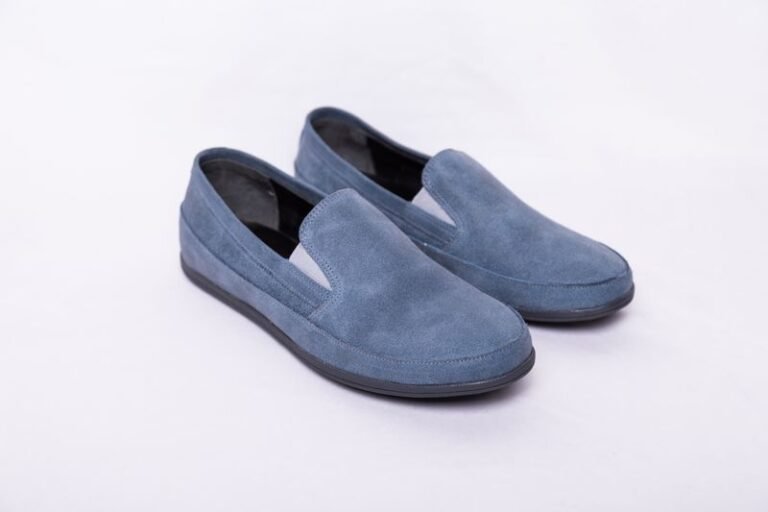
Slip-on styles and easy fastenings make shoes much easier to put on and take off, especially if bending or fiddling with laces is difficult. Look for shoes with a wide opening, a pull tab at the back, and a fastening you can manage easily, such as Velcro, a zip, or an elasticated lace. A shoe horn helps you put shoes on without bending, and a long-handled shoe horn is even easier. Our guide to Best Slip On Walking Shoes for Seniors explains slip-on styles in more detail, and our guide to Sneakers for Seniors covers comfortable sneakers and slip-on styles.
Try the fastening before you buy, and check that you can open and close it easily. A fastening that is hard to manage in the shop will be harder at home. If you have stiff hands, look for large, easy-to-grip fastenings, and avoid small buttons or thin laces.
Looking after your walking shoes
Looking after your walking shoes keeps them comfortable and safe for longer. Clean them after use, and let them dry naturally, away from direct heat. Replace the insoles when they wear down, and check the soles for wear from time to time. Replace your walking shoes when the tread wears down, the cushioning feels flat, or the shoes no longer feel comfortable. As a rough guide, walking shoes last for many months of regular use, but the exact life depends on how often you walk and where you walk.
Frequently asked questions
What are the most comfortable walking shoes for women?
The most comfortable walking shoes for women are the ones that fit well, cushion your feet, and support your arches. Look for a cushioned insole, a wide, roomy toe box, and a sole that bends where your foot bends. Try shoes on in the afternoon, walk around the shop, and choose the pair that feels comfortable straight away. AARP publishes general guidance on footwear for older adults that may help you plan.
Should walking shoes be tight or loose?
Walking shoes should be neither tight nor loose. They should fit snugly around the heel, with about a thumb’s width between your longest toe and the end of the shoe, and enough room in the toe box for your toes to move freely. A shoe that is too tight will pinch and rub, and a shoe that is too loose will slip and cause blisters. The Arthritis Foundation offers general information on foot care and footwear that may help you plan.
When is the best time to try on walking shoes?
Try shoes on in the afternoon, when your feet are at their largest, and walk around the shop before you buy.
Choose shoes that feel good
The best walking shoes for women are the ones that feel good on your feet, support you as you walk, and grip the ground well. Try shoes on, walk around the shop, and choose the pair that feels comfortable straight away. A good pair of walking shoes will help you walk further and enjoy it more. For more ideas, visit our Blog.
For more guidance, see AARP and the Arthritis Foundation.