Large Print Crossword Puzzles for Elderly
By the Editorial Team
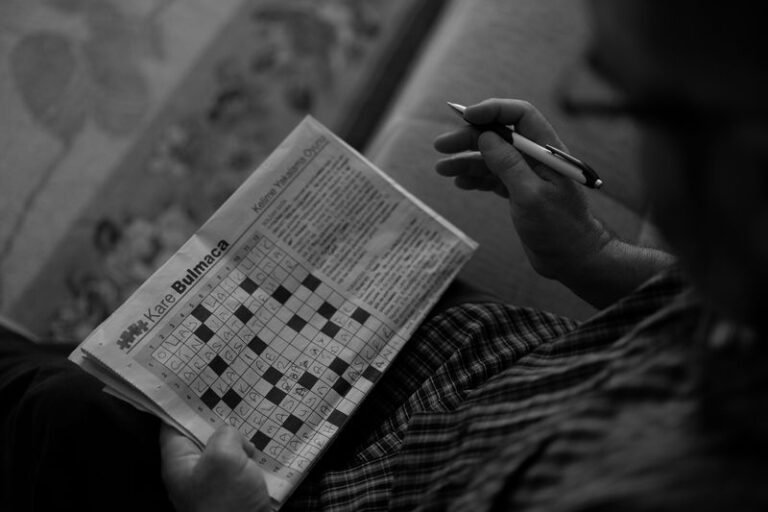
Large print crossword puzzles for elderly players are a calm and satisfying way to spend an afternoon. The clues are printed in big, clear letters, the grid has roomy squares, and you can work at your own pace with a cup of tea beside you. There is no rush and no score to beat, just the quiet pleasure of finding the right word. If small print has made crosswords harder to enjoy, large print brings the fun back. This guide explains how to choose large-print crosswords, where to find them, and how to get the best from them.
What are large print crossword puzzles for elderly players?
Large print crossword puzzles for elderly players are ordinary crosswords printed with larger clues, larger grids, and wider spacing than standard puzzles. The words and answers are the same kind you would find in any newspaper crossword, but everything is easier to read and easier to write in. Most large-print puzzle books use at least 16-point type for the clues, and the squares are big enough for a pen or a thick pencil. They come in easy, medium, and challenging levels, so you can choose one that suits you.
Why they suit older adults
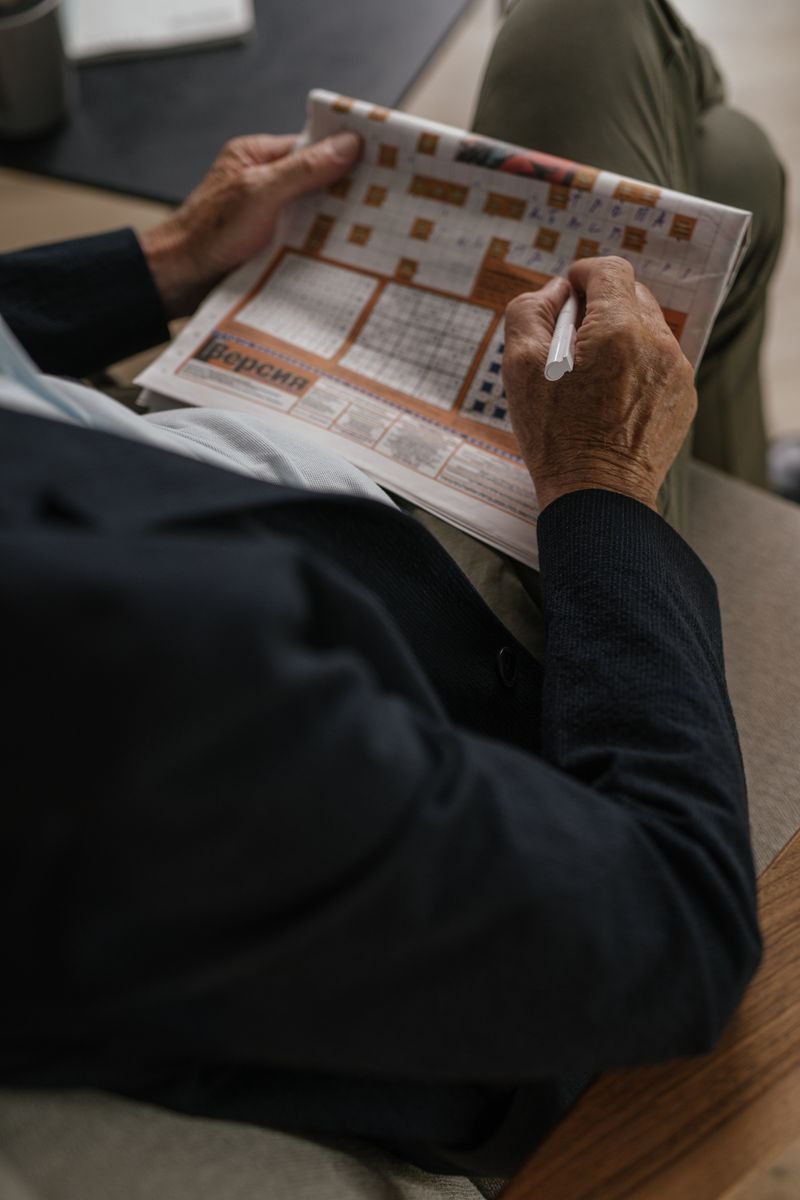
Crosswords are popular with older adults because they are absorbing without being stressful. Working out a clue uses memory, word knowledge, and a little lateral thinking, and the small success of each answer is satisfying. A crossword is also a good companion: it fills a quiet morning, gives you something to talk about with family, and can be put down and picked up again at any time. Many people enjoy doing the daily crossword from their newspaper as part of a morning routine, and a large-print version makes that routine comfortable again.
Large print also helps when the light is not perfect. In the evening, or in a room with soft lighting, a large-print crossword is far easier to read than a standard one. A bright lamp and a comfortable chair make the experience even better, and a clipboard or a firm book under the page helps if you solve in an armchair.
Choosing the right crossword
Choosing the right crossword matters more than most people think. Start with an easy puzzle, even if you are an experienced solver, because large print is about comfort, not difficulty. Look for a book or puzzle that says easy or beginner on the cover, and check that the clues are printed clearly with good contrast. Themed puzzles, such as ones about gardening, travel, or history, are often more fun than general ones, because the answers draw on things you already know.
Pay attention to the grid as well as the clues. The squares should be large enough to write a letter clearly, and the black squares should be easy to tell apart from the white ones. If you solve with a pen, choose paper that does not bleed through, and if you prefer pencil, a soft pencil with a good eraser is best. For a closer look at this type of puzzle, see our guide to Large Print Crossword Puzzles.
Where to find large print crosswords
Large-print crossword books are sold in most bookshops, supermarkets, and charity shops, and they are usually inexpensive. Your local library is an excellent place to look: many libraries stock large-print puzzle books, and librarians can often order one for you. Newspapers sometimes print a large-print crossword in their weekend editions, and many puzzle websites offer free large-print crosswords that you can print at home. This site does not provide printable puzzles, but the bookshops, libraries, and puzzle websites above are good places to find them.
When you find a puzzle you like, note where it came from so you can find more of the same kind. Puzzle books in a series usually keep the same style and difficulty, which makes choosing the next one easy. If you enjoy crosswords with a friend, buying two copies of the same book means you can each work on the same puzzle and compare answers.
What to check before you print
If you print crosswords from a website, a few checks will save paper and frustration:
- Use the print preview to check that the grid and clues fit on the page.
- Choose a large font size in the print settings if the puzzle offers one.
- Print in black and white, which is clearer and cheaper than colour.
- Check that the clues are not cut off at the edge of the page.
- Print one puzzle first to test the size before printing several.
Tips for solving crosswords
Start with the clues you know, and fill in the answers you are sure about first. The letters from those answers will help you work out the harder clues. Read the clue carefully, because crossword clues often use wordplay, and a clue that seems odd may have a playful answer. If you get stuck, put the puzzle down and come back to it later; a fresh look often brings the answer. There is no shame in checking a dictionary or asking someone for help, and the answer section at the back of a puzzle book is there to be used.
Work in good light and take your time. A crossword is not a race, and the pleasure is in the solving. If your eyes get tired, take a break, look out of the window, and return to the puzzle when you feel rested. For more puzzles that are gentle on the eyes and the mind, see our guide to Large Print Puzzles for Elderly.
Solving crosswords together
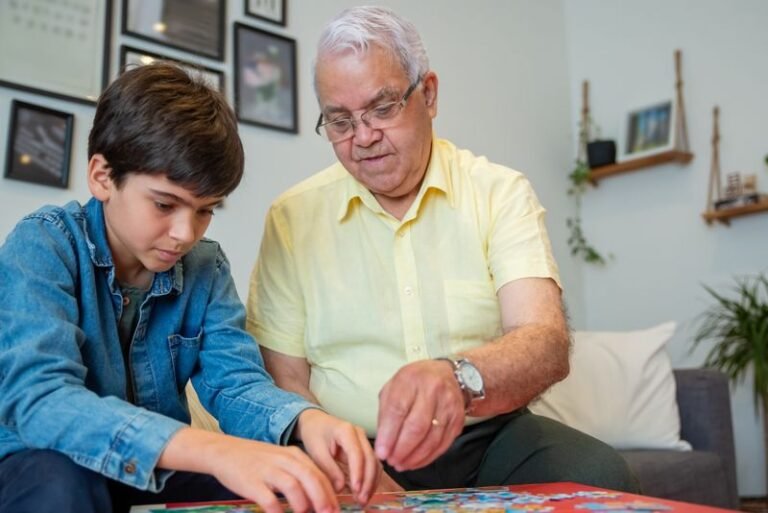
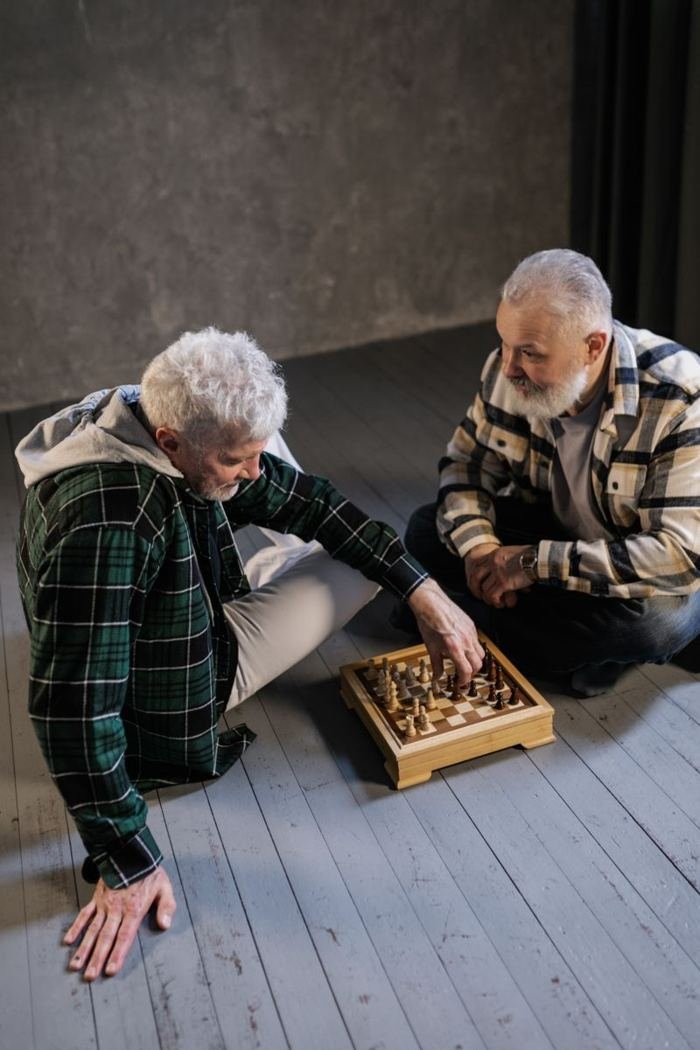
Crosswords are easy to share. Two people can work on the same puzzle together, taking turns with the clues, and grandchildren often enjoy helping with the answers they know. Solving together turns a quiet pastime into a sociable one, and it gives everyone something to talk about. If you care for someone living with dementia, a large-print crossword worked on together, at a gentle pace, can be a pleasant shared activity. For more ideas, see our Easy Games for Seniors with Dementia guide.
Crosswords and keeping the mind active
Many people enjoy crosswords because they keep the mind active in a pleasant way. Thinking about words, remembering facts, and working out clues are all gentle mental exercise, and doing them regularly is a healthy habit. The National Institute on Aging notes that staying mentally and socially active is a valuable part of healthy ageing, and a daily crossword is a simple way to do that. A crossword will not prevent any illness, and no puzzle can promise that, but it is an enjoyable and worthwhile pastime in its own right.
Frequently asked questions
Are large print crosswords free to print?
Many newspapers and puzzle websites offer free large-print crosswords that you can print at home, and libraries lend large-print puzzle books at no cost. Always check the print preview first, and respect any copyright notice on the puzzle. This site does not provide printable puzzles, but the bookshops, libraries, and puzzle websites mentioned above are good places to find them.
What size print should I look for?
Look for clues printed in at least 16-point type, which is roughly twice the size of ordinary newspaper print. The grid squares should be at least a centimetre across so you can write a letter clearly. If you are unsure, hold the book at a normal reading distance in the shop and check that you can read the clues without straining. AARP publishes guidance on large-print reading materials that may help you choose.
How do I start solving a crossword?
Start with the clues you know, and fill in the answers you are sure about first. Work in good light and take your time.
Start with an easy puzzle today
Large print crossword puzzles for elderly players bring back a pleasure that small print may have taken away. Choose an easy puzzle, find a comfortable chair with good light, and give yourself half an hour to enjoy it. When you finish, share a clue you liked with someone, or start the next puzzle. For more ideas for quiet afternoons, visit our Blog.
For more ideas, see the National Institute on Aging and AARP.